S355J2WP Weathering Steel Plate Normalizing Requirements
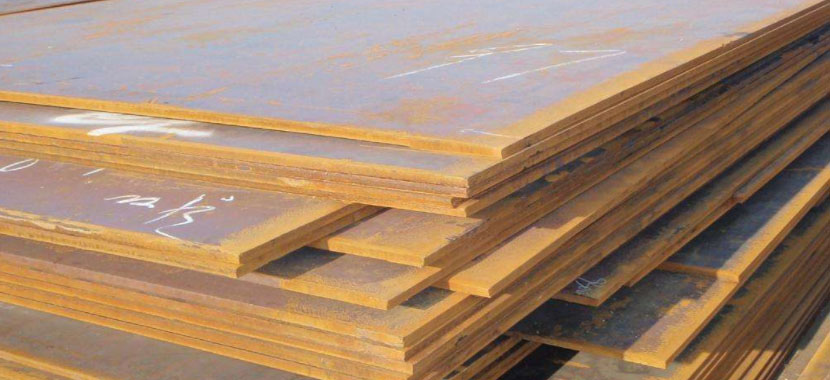
S355J2WP can be delivered in different conditions: as-rolled, normalized-rolled, or normalized. Most plates up to about 20mm thick ship as-rolled and perform fine. But for thicker sections, critical applications, or specific forming requirements, normalizing becomes relevant.
What is normalizing?
Normalizing is a heat treatment process. The steel is heated to 850–950°C (above the upper critical temperature), held long enough to homogenize the structure, then cooled in still air. This refines the grain structure, improves toughness, and removes internal stresses.
For S355J2WP, the process temperature typically lands around 880–920°C, depending on chemistry and thickness. Holding time is roughly 1–2 minutes per millimeter of thickness. Cooling in still air follows—no quenching or accelerated cooling.
When is normalizing required?
Normalizing isn't mandatory for most S355J2WP applications. But here's when you should consider it:
Thick plates (over 40mm). As-rolled cooling rates slow down for thick sections, resulting in larger grains and lower impact toughness. Normalizing restores fine grain structure.
Forming or bending operations. Normalized steel has better ductility and more predictable springback.
Critical cold-weather structures. Bridges, railcars, and heavy load members in -20°C environments benefit from the improved toughness.
When the specification calls for it. Some projects explicitly require normalized delivery.
When the standard requires it. EN 10025-5 allows as-rolled delivery, but for certain thickness ranges or impact requirements, normalized or normalized-rolled becomes necessary to meet the values.
What normalizing does for S355J2WP.
Refines grain structure. Finer grains mean better toughness, especially at low temperatures.
Improves impact toughness. Normalized S355J2WP typically delivers Charpy values above the 27J minimum—often 40–60J at -20°C.
Reduces internal stresses. Beneficial before heavy machining or welding.
Ensures uniform properties. Through-thickness variation in mechanical properties is reduced.
Helps meet yield strength. For thick plates where as-rolled yield might drop below 355 MPa, normalizing can restore the required numbers.
Normalized-rolled vs. normalizing.
There are two delivery conditions that achieve similar results:
Normalized-rolled (N). The rolling process itself achieves the grain refinement—controlled rolling and cooling that mimics normalizing without separate heat treatment.
Normalized (N). The steel is rolled, then reheated and held for a separate heat treatment cycle.
Both are acceptable under EN 10025-5, but normalized-rolled is often cheaper and faster. Normalizing adds cost and lead time.
When to specify normalizing on your order.
If your project needs normalized S355J2WP, put it on the purchase order clearly:
"S355J2WP +N" (normalized) or "S355J2WP +AR" (as-rolled) if you don't need it.
Specify the heat treatment condition, not just the grade.