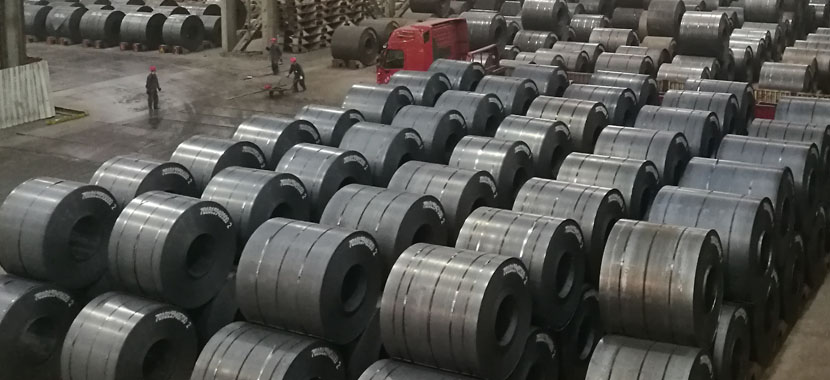
S355J2WP Weathering Steel Plate Controlled Rolling Requirements
Not all S355J2WP plates are rolled the same way. Standard as-rolled material works for many applications, but controlled rolling—often called thermomechanical controlled processing (TMCP)—delivers better toughness, finer grain structure, and more consistent properties. Here's what it involves and when you need it.
What is controlled rolling?
Controlled rolling is a precisely managed rolling process. The steel is rolled at specific temperatures, with controlled reduction per pass, and often followed by accelerated cooling. The goal: refine the grain structure without separate heat treatment. Finish rolling typically occurs below 900°C, and cooling rates are carefully monitored.
Key parameters in controlled rolling.
Reheating temperature. Slabs are heated to 1150–1250°C, but controlled rolling requires tighter control on the upper limit to avoid excessive grain growth.
Roughing stage. High-temperature reduction (above 1000°C) breaks down the cast structure. Reduction per pass is typically 10–20%.
Finishing stage. Rolling below 900°C—sometimes as low as 820°C—refines the austenite grains. Multiple passes with controlled reduction (often 15–25% per pass) create fine, uniform grains.