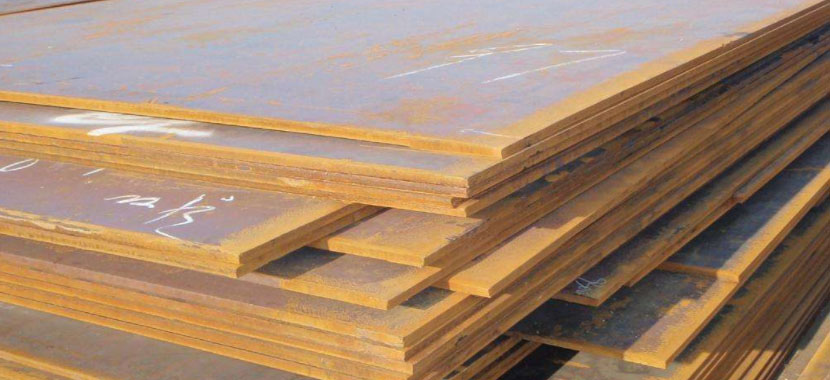
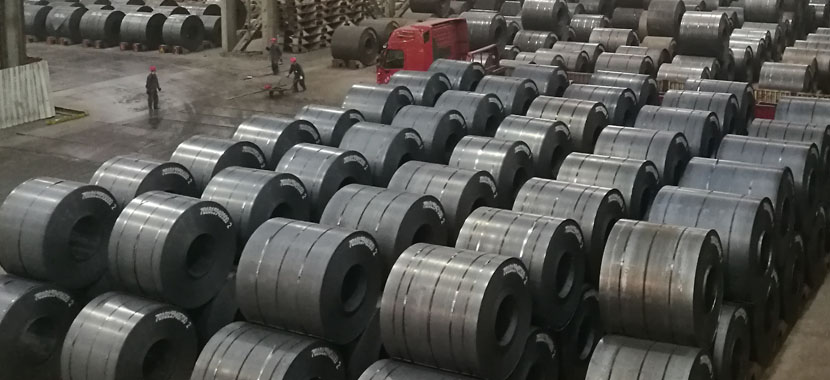
Production Process of EN10025-5 S355J2WP Weathering Steel
Making S355J2WP isn't the same as making ordinary carbon steel. The alloying elements that give it weather resistance change everything—from melting practices to rolling temperatures. Here's a plain-language walk through the production line.
Step 1: Raw material and melt shop.
The process starts with iron ore, scrap steel, and alloying additions. Copper, chromium, nickel, and phosphorus are introduced in the electric arc furnace or basic oxygen furnace. Each heat is precisely calculated to hit the EN 10025-5 chemical window.
Step 2: Secondary metallurgy and degassing.
This is where the magic happens. The molten steel undergoes ladle refining to adjust final chemistry, remove sulfur, and control oxygen levels. Fine-tuning here ensures the copper, chromium, and nickel stay within spec. A degassing unit removes hydrogen—critical for avoiding cracks in heavy plates.
Step 3: Continuous casting.
The clean, degassed molten steel is poured through a tundish into a water-cooled copper mold. It solidifies into slabs, blooms, or billets. For S355J2WP plates, slab thickness typically ranges from 150mm to 250mm, depending on final plate dimensions.
Step 4: Reheating.
The cold slabs move to a reheat furnace, where they're heated to 1150–1250°C. This brings the steel to a plastic state—ready for rolling. The heating cycle is controlled to avoid decarburization and excessive grain growth.
Step 5: Hot rolling – roughing and finishing.
The slab passes through a reversing roughing mill, reducing thickness in multiple passes. Then it moves to a finishing mill with 5–7 stands, reducing down to the specified plate thickness (6–150mm typically). Rolling temperatures are carefully managed—finish rolling typically ends above 850°C to achieve the required grain structure.
Step 6: Cooling and levelling.
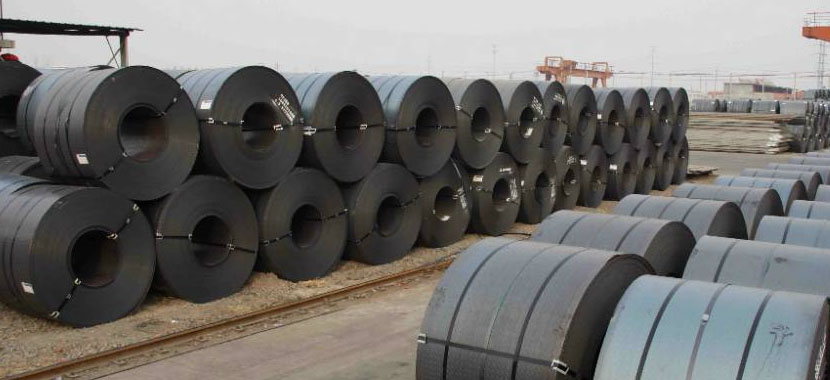
After rolling, the plate moves onto a cooling bed. Natural cooling in air is typical for standard delivery. For normalized or thermomechanical rolling, accelerated cooling may be used, but S355J2WP usually ships as-rolled or normalized depending on thickness. The plate then passes through a roller leveller to correct flatness.
Step 7: Cutting and inspection.
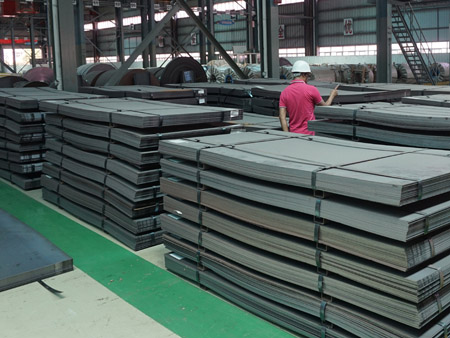
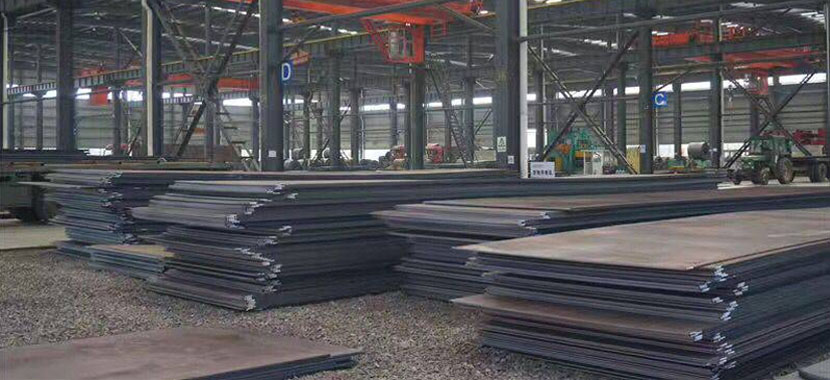
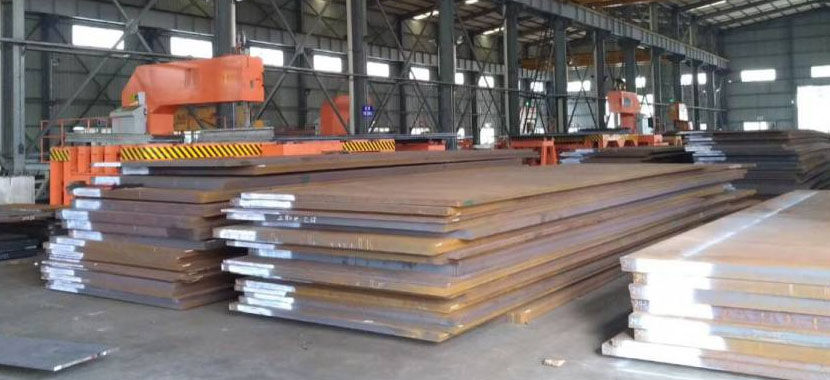
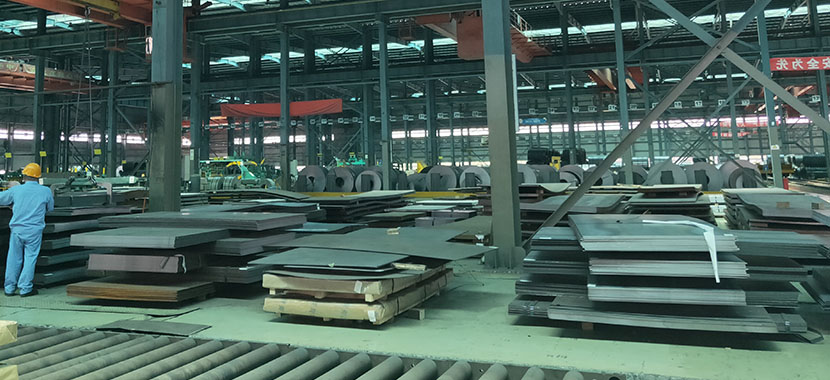
Plates are cut to ordered dimensions (often via plasma or shearing). Each plate is visually inspected. Samples are taken for chemical analysis, tensile testing, and impact testing to verify compliance with EN 10025-5.
Step 8: Marking and certification.
The mill stamps or stencils the grade, heat number, dimensions, and inspection markings. The mill certificate follows the plate, detailing chemistry, mechanical properties, and test results.
How this differs from standard carbon steel.
Weathering steel requires tighter chemistry control—especially for copper (0.25–0.55%). Rolling parameters are adjusted to avoid surface cracking, as copper can cause hot shortness during rolling. And the cooling rate affects patina-forming elements, so mills track temperature carefully.
Delivery timelines.
From order to shipment, S355J2WP plates typically take 3–6 weeks, depending on mill schedule and testing requirements. Supplementary testing (additional impact samples or UT inspection) may add 1–2 weeks.