+86-371-86151827
[email protected]

- +86-371-86151827
- High-tech Development Zone, Zhengzhou, China
- 08:30 am – 06:00 pm
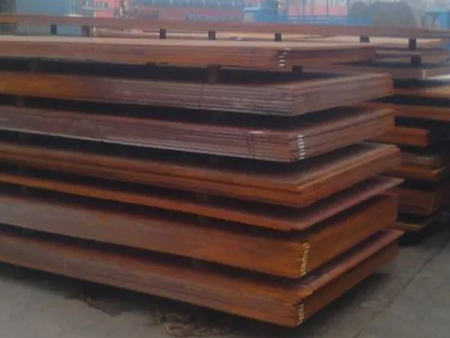
Forming S355K2G2W requires attention to its higher strength and alloy content. Here's how to get clean bends without cracks.
Minimum bend radius. For transverse bending (across rolling direction), use 2.5–3× thickness for plates up to 12mm. A 6mm plate needs a 15–18mm inside radius. Bending parallel to rolling direction? Increase to 3.5–4× thickness. For thicker plates (over 12mm), increase radius to 3–4× thickness.
Springback control. S355K2G2W has more springback than mild steel. Overbend by 2–3 degrees beyond your target angle. Run a sample first, measure, and adjust.
Temperature. Room temperature works for most applications. For thick plates (over 15mm) or tight bends, preheat to 100–150°C. Don't skip this in cold shops during winter.
Grain direction. Always bend across rolling direction when possible. Bends parallel to grain are more prone to surface cracking. If parallel is unavoidable, increase inside radius by 20–30%.
Tooling. Use punch nose radius matching target inside radius. Die opening should be 8–12× plate thickness. For thick plates, use larger die openings to reduce required tonnage.
After bending. Inspect outside radius for cracks. Any cracks over 0.5mm? Reject. For critical parts, use dye penetrant testing on samples. Don't grind the bend area aggressively—you'll remove the natural surface needed for patina formation.
Common mistakes. Using too tight a radius (under 2.5× thickness), bending parallel without increasing radius, or cold bending thick plates in winter. Test first, then produce.
Hot ProductsMore+
If you have any need about our steel products, Please send email to [email protected] or leave a message to use this function. we will reply you ASAP!