+86-371-86151827
[email protected]

- +86-371-86151827
- High-tech Development Zone, Zhengzhou, China
- 08:30 am – 06:00 pm
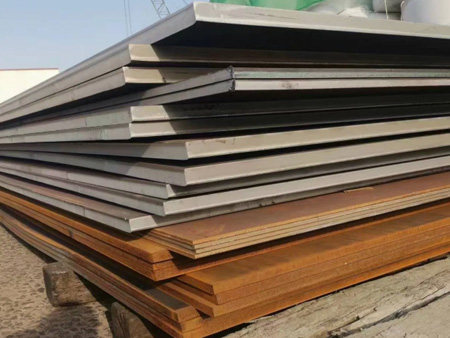
Numbers tell the story better than adjectives. Here's how S355K2G2W performs in real atmospheric exposure.
Corrosion rates by environment (first 10 years, average):
| Environment | Carbon steel | S355K2G2W |
|---|---|---|
| Rural | 0.05 mm/year | 0.008 mm/year |
| Urban | 0.07 mm/year | 0.010 mm/year |
| Industrial | 0.10 mm/year | 0.012 mm/year |
| Marine (coastal) | 0.15+ mm/year | 0.05+ mm/year |
In rural and urban atmospheres, S355K2G2W corrodes at roughly one-tenth the rate of unprotected carbon steel. Even in industrial environments with moderate pollution, the patina holds up well.
Why the numbers improve over time.
Corrosion rates aren't linear. In the first 1–2 years, S355K2G2W corrodes faster as the patina forms. After stabilization (year 3 onward), rates drop significantly. By year 10, the annual loss is often below 0.005mm in moderate environments.
What the data means for design.
At 0.008 mm/year, a 10mm plate loses just 0.08mm over a decade. Over 50 years, roughly 0.4mm—negligible for structural thickness. This is why weathering steel bridges and buildings last generations without coating.
What the data doesn't cover.
Marine environments with constant salt spray. The patina struggles, and corrosion rates climb. For coastal projects, either use a higher grade, apply coatings, or choose a different material.
Testing standards. These rates come from long-term exposure tests following ISO 9223/9224 classification. Actual performance depends on your specific site conditions.
Hot ProductsMore+
If you have any need about our steel products, Please send email to [email protected] or leave a message to use this function. we will reply you ASAP!