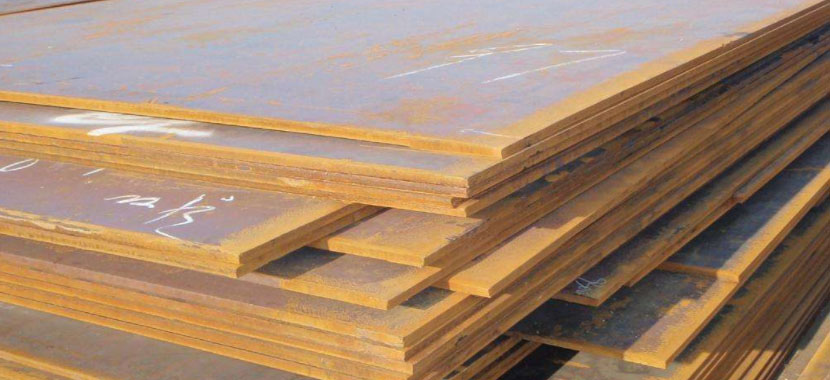
S355J2WP Weathering Steel Plate Forming Key Process Points
Forming S355J2WP isn't the same as working with mild steel. The higher strength, different alloy chemistry, and springback behavior require attention. Get it right, and you'll get clean bends without cracks or excessive tool wear. Here's how.
Minimum bend radius matters.
For transverse bending (across the rolling direction), a safe rule is 2.5 to 3 times plate thickness for material up to 12mm. Example: a 6mm plate needs a 15–18mm inside radius.
Bending parallel to the rolling direction? Increase that to 3.5–4 times thickness. The steel is less forgiving that way.
For thicker plates (over 12mm), increase the inside radius to 3–4 times thickness. This reduces the risk of cracking on the outside of the bend.
Springback is real.
S355J2WP has more springback than ordinary structural steel. Your first test bend will spring open more than you expect. Lessons learned: overbend by roughly 2–3 degrees beyond your target angle. Run a sample piece first. Measure the angle after springback. Adjust your press brake settings accordingly.
Temperature control.
At room temperature, S355J2WP bends fine for most applications. But if the plate is thick (over 15mm) or the bend is very tight (inside radius less than 2.5× thickness), gentle preheating to 100–150°C helps reduce cracking risk. Don't skip this in cold shops during winter—cold steel plus sharp bend equals hidden trouble. Warm the bend area evenly, not just the edge.
Grain direction matters.
Always try to bend across the rolling direction if the part design allows. Bends running parallel to the grain are more likely to show surface cracking on the outside radius. Check your mill certificate for rolling direction markings. If you must bend parallel, increase the inside radius by 20–30%.
Tooling selection.
Use standard press brake tooling, but consider these adjustments:
Avoid sharp punches. Use a punch nose radius that matches your target inside radius.
Die opening should be 8–12 times the plate thickness for most applications.
For thick plates, use larger die openings to reduce required tonnage and minimize cracking risk.
After bending.
Inspect the outside radius visually. Any cracks longer than 0.5mm? Reject.
For critical parts, use dye penetrant testing on a sample from each production batch.
Don't grind the bend area aggressively after forming—you'll remove the natural surface that would otherwise form the protective patina.
If the bend shows slight springback, compensate in the next part—don't try to re-bend the same piece without annealing.
Common mistakes to avoid.
Using too tight a radius (under 2.5× thickness)
Bending parallel to the rolling direction without increasing the radius
Cold bending thick plates (over 15mm) in winter conditions
Not running a test piece before production
Over-grinding the bend surface after forming
Practical shop-floor tip.
Keep a log of your bending trials. Record plate thickness, inside radius, die opening, punch radius, and springback angle. After a few projects, you'll have a reliable database for your specific equipment and material.